
No products in the cart.

Studio Monitors
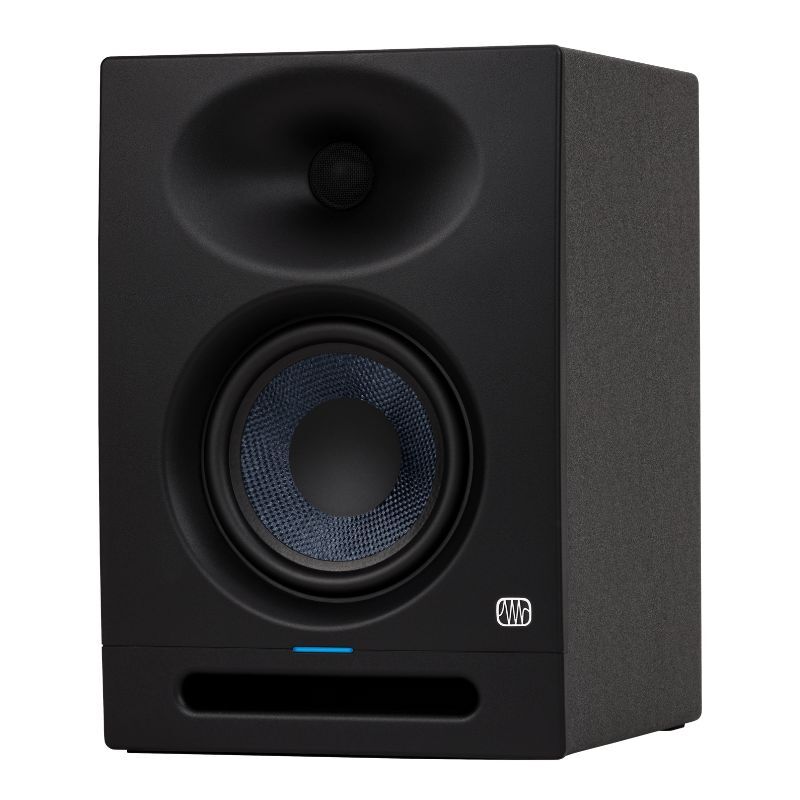
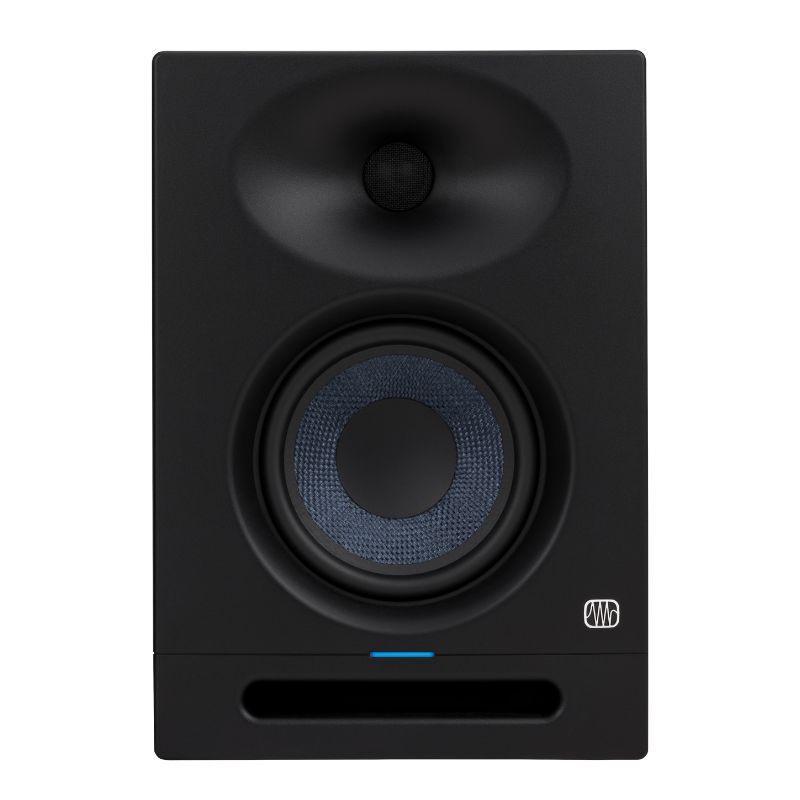
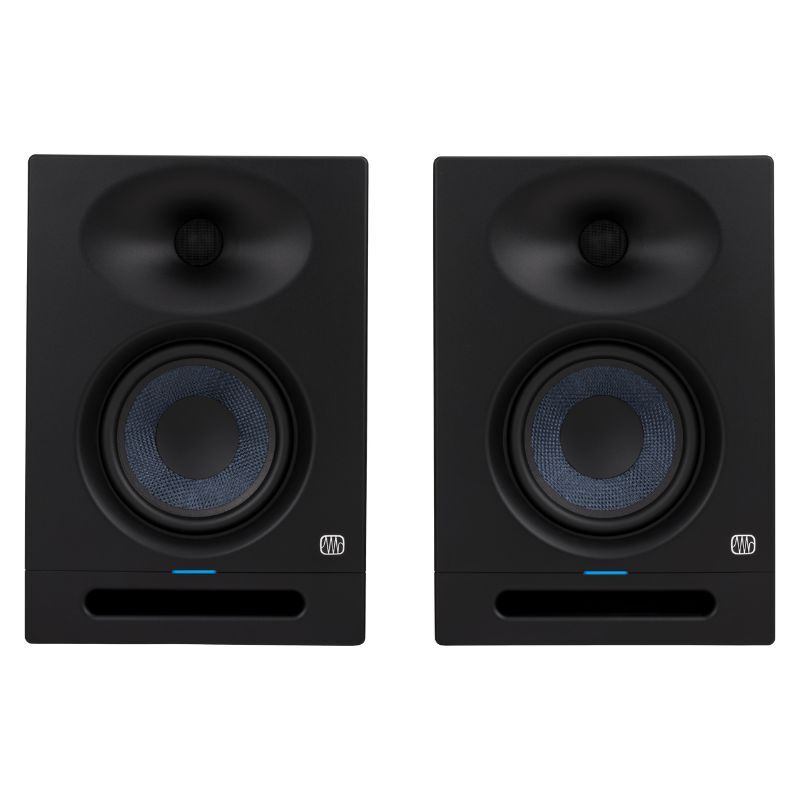
Presonus Eris Studio 5 Active Studio Monitors
Key Features
- 5.25″ woven composite woofer
- 1″ silk‑dome tweeter
- Amplification 80W Class AB bi‑amped design (per speaker)
- Frequency Response 48 Hz – 20 kHz (extended low‑end compared to smaller Eris models)
- Maximum SPL 102 dB
- Waveguide: Custom‑designed EBM (Elliptical Boundary Modeled) waveguide for a wide sweet spot and superior stereo imaging
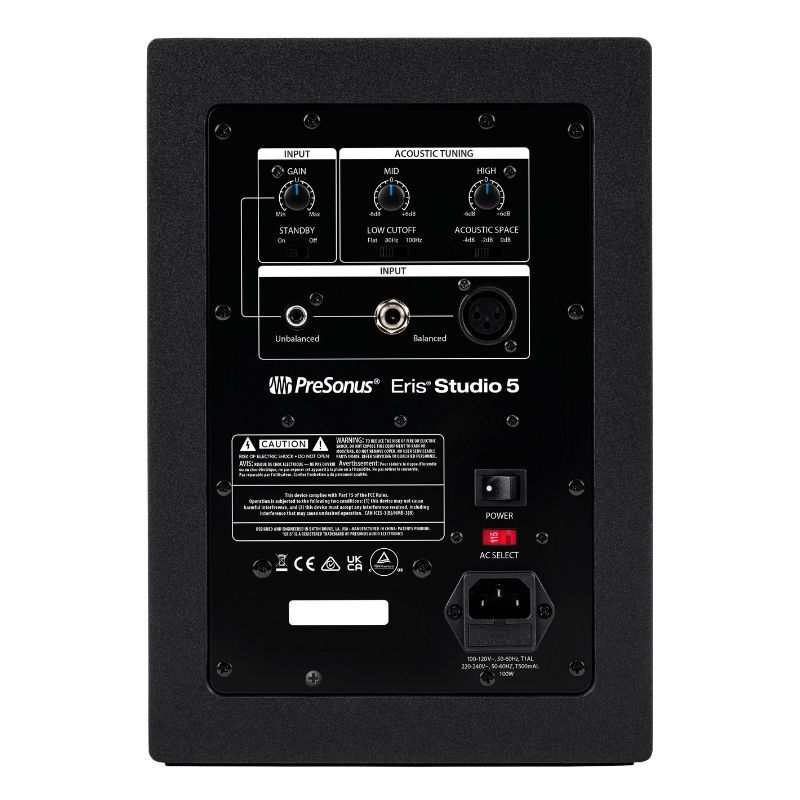
- Inputs: Balanced XLR, balanced ¼” TRS, unbalanced RCA
- Controls: Acoustic tuning (high/low EQ) for room adjustment
₨ 170,000
The PreSonus Eris Studio 5 is a high-definition near-field monitor that represents a significant update to the classic Eris E5. Released in late 2023, it is designed for home studios and small professional mix rooms, offering a more refined high-end and deeper bass response than its predecessors.
The Studio 5 uses a bi-amplified Class AB design, delivering a total of 80W of power.
Core Improvements & Features
-
EBM Waveguide: It features an Elliptical Boundary Modeled (EBM) waveguide designed by Hugh Sarvis. This provides a wide 120° horizontal dispersion (broadening the “sweet spot”) and a narrow vertical dispersion to minimize desk reflections.
-
Enhanced Low End: Compared to the original E5 (which reached 53 Hz), the Studio 5 extends down to 48 Hz, providing more punch without necessarily requiring a subwoofer.
-
Acoustic Tuning: The rear panel is packed with controls to adapt to your room:
-
Acoustic Space: (Flat, -2 dB, -4 dB) to compensate for boundary bass boost when placed near walls.
-
Low Cut: (Flat, 80 Hz, 100 Hz) for seamless subwoofer integration.
Mid & High EQ: $\pm 6$ dB variable controls for fine-tuning.
-
-
Connectivity: Includes balanced XLR, balanced 1/4″ TRS, and unbalanced RCA inputs.
-
Power Saver Mode: An eco-friendly feature that engages after 40 minutes of inactivity.
Build & Design
- Form Factor: Compact but powerful, suitable for small to medium studios
- Cabinet: Sturdy MDF with rear porting for enhanced bass response
- Dimensions: ~260 × 180 × 200 mm
- Weight: ~6.4 kg (single unit)
- Aesthetic: Matte black finish with professional studio look
Applications
- Home Studios: Accurate monitoring for mixing and production
- Project Studios: Wide stereo imaging makes them ideal for detailed editing and mastering
- Content Creation: Reliable sound for YouTubers, podcasters, and streamers
- Education: Affordable monitors for audio production courses
Why Choose This Over the E5 XT?
While they look similar, the Studio 5 is the newer iteration. It offers a slightly different cabinet design and a wider horizontal dispersion (120° vs. the XT’s 100°), making it even more forgiving if you move around while mixing.
Based on 0 reviews
Be the first to review “Presonus Eris Studio 5 Active Studio Monitors”
You must be logged in to post a review.
Related products
-
- Studio Monitors
KRK ROKIT 7 G5 Powered Studio Monitor Pair
- Bi-Amped Class-D, 145W Max Output Power
- 3 Voicing Modes: Create, Mix, and Focus
- LCD Display for EQ and Setup Parameters
- Balanced TRS/XLR Combo Jack Inputs
- Magnetically Affixed Faceplate
- Mounting Points for KRK Mounting Bracket
- Includes Foam Wedge Isolation Pad
SKU: n/a


There are no reviews yet.