
No products in the cart.

Studio Monitors
Yamaha HS8 Powered Studio Monitor
Key Specifications:
-
Speaker type: Powered (active) studio monitor
-
Driver Configuration:
-
8” woofer
-
1” dome tweeter
-
Frequency Response: 38 Hz – 30 kHz
-
Crossover Frequency: 2 kHz
-
Output Power: 120W (75W LF, 45W HF)
₨ 265,000
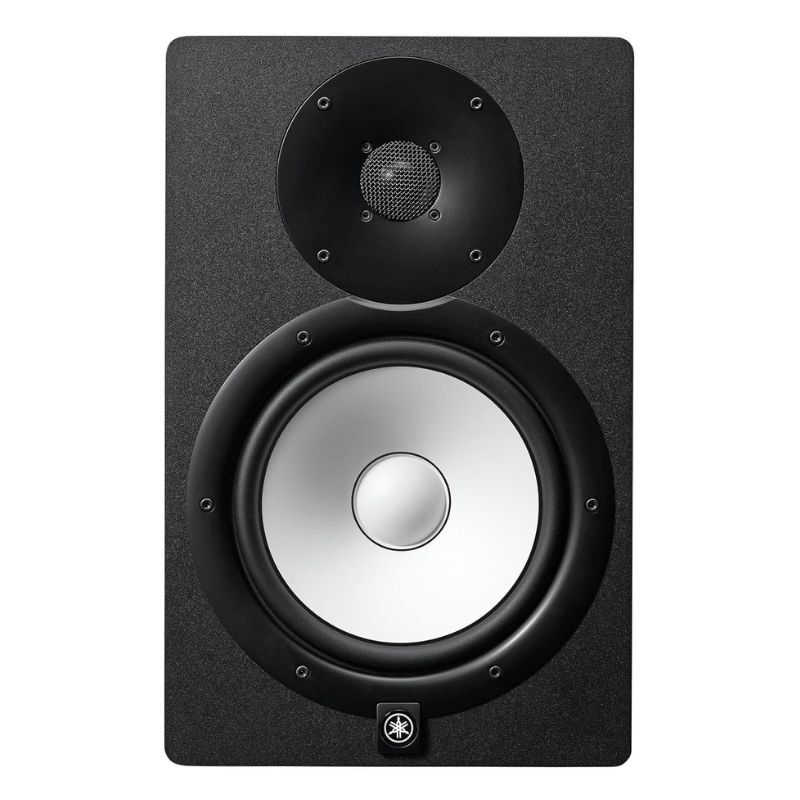
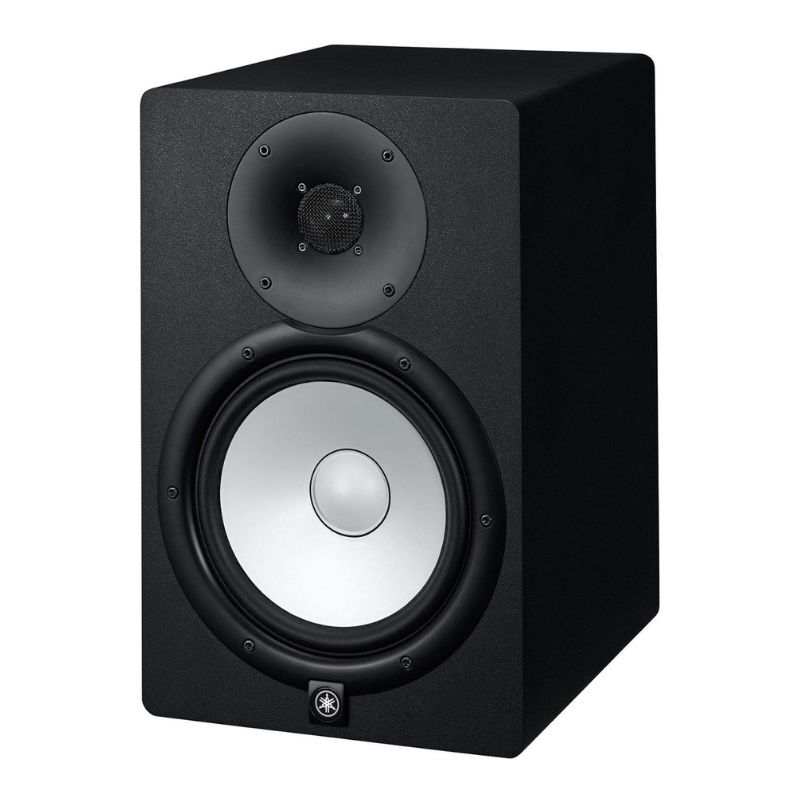
The Yamaha HS8 is an iconic 8-inch active (powered) studio monitor, part of Yamaha’s highly respected HS series. These monitors are renowned for their flat, accurate, and uncolored sound reproduction, making them a favorite among music producers, mixing engineers, and audio professionals who prioritize a transparent reference for their work. They are often seen as the modern spiritual successor to the legendary Yamaha NS-10M.
Key Features and Highlights:
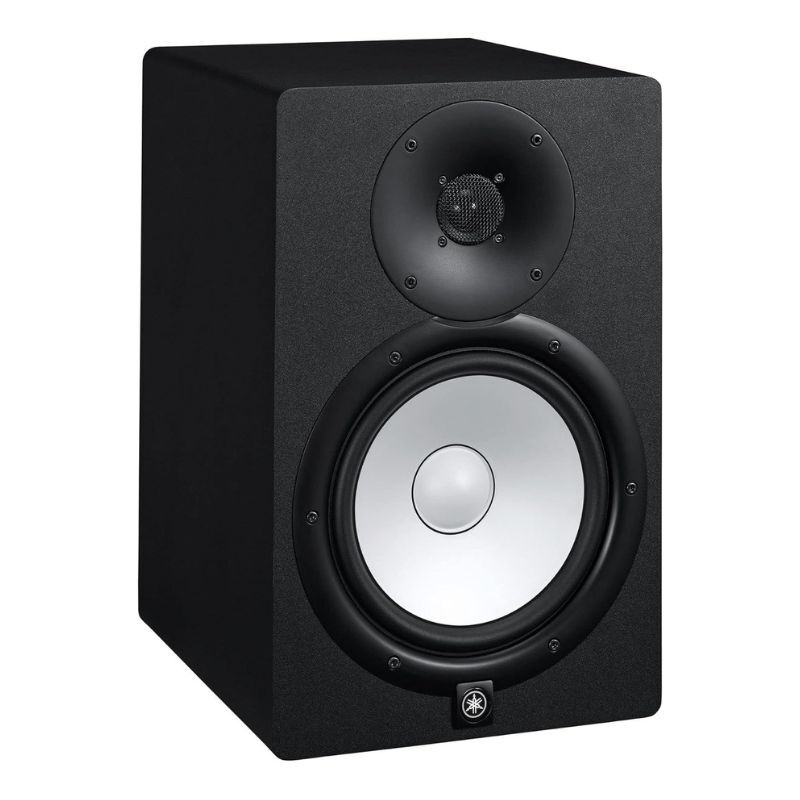
- 8-inch White Cone Woofer: The HS8 features an 8-inch cone woofer, instantly recognizable by its signature white color. This driver is designed for excellent transient response and a robust, well-defined low-end. Yamaha emphasizes the use of large, carefully selected magnets to ensure a tightly controlled magnetic flux field for smooth and dynamic response across a wide frequency range.
- 1-inch Dome Tweeter with Waveguide: Equipped with a 1-inch dome tweeter that utilizes a thick waveguide. This design helps to control the dispersion of high frequencies, creating an optimized and expansive sweet spot (the ideal listening position) and minimizing reflections, leading to more accurate stereo imaging. Yamaha also implements a smooth-contour design for the tweeter frame to minimize losses and resonance, ensuring clear high-frequency detail up to 30 kHz.
- Bi-Amplified Design: The HS8 is a bi-amplified monitor, meaning it has separate, dedicated power amplifiers for the low-frequency and high-frequency drivers. This provides efficient power delivery, reduces distortion, and allows for perfect matching of the amplifiers to the characteristics of each speaker unit.
- Total Power: 120 watts of power (75 watts for the LF driver, 45 watts for the HF driver). This provides ample headroom for dynamic mixes and high SPL.
- Low Resonance Enclosure: The cabinet is constructed from high-density MDF (Medium Density Fiberboard) with a damped acoustic response, designed to eliminate unwanted resonance and increase the accuracy of sound reproduction. Yamaha employs a traditional three-way mitered-joint technique, common in architectural design, to firmly anchor the corners, further improving durability and eliminating resonance that could color the sound.
- Noise Reduction Technology (Vortex Sound Control): Yamaha has implemented a unique port design that incorporates a visual analysis of airflow. This “Vortex Sound Control” technology effectively reduces air vibrations and unwanted noise from the rear-firing bass port by up to 6dB, resulting in a clearer low-end.
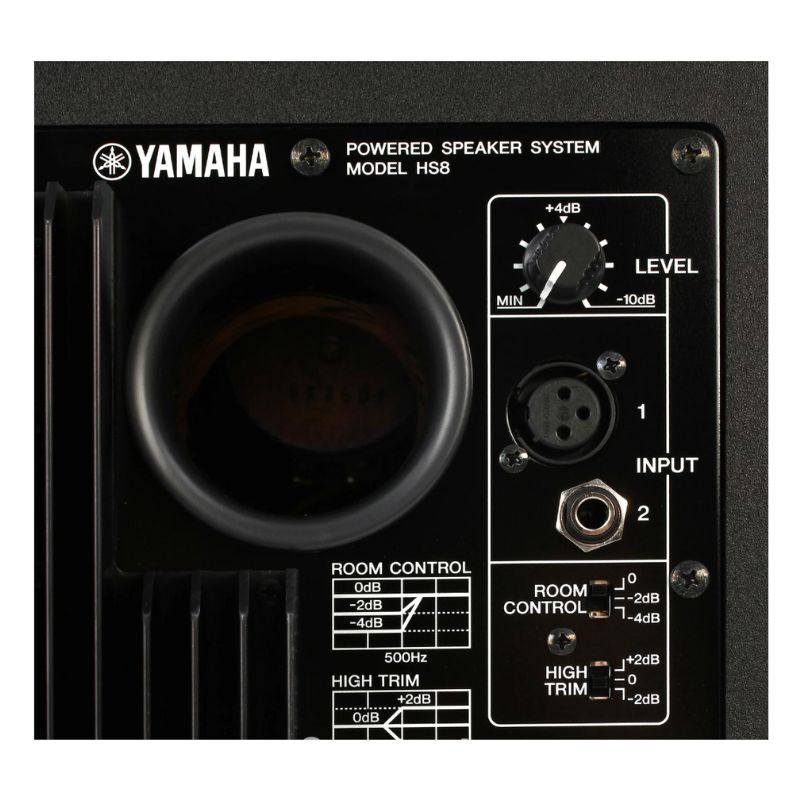
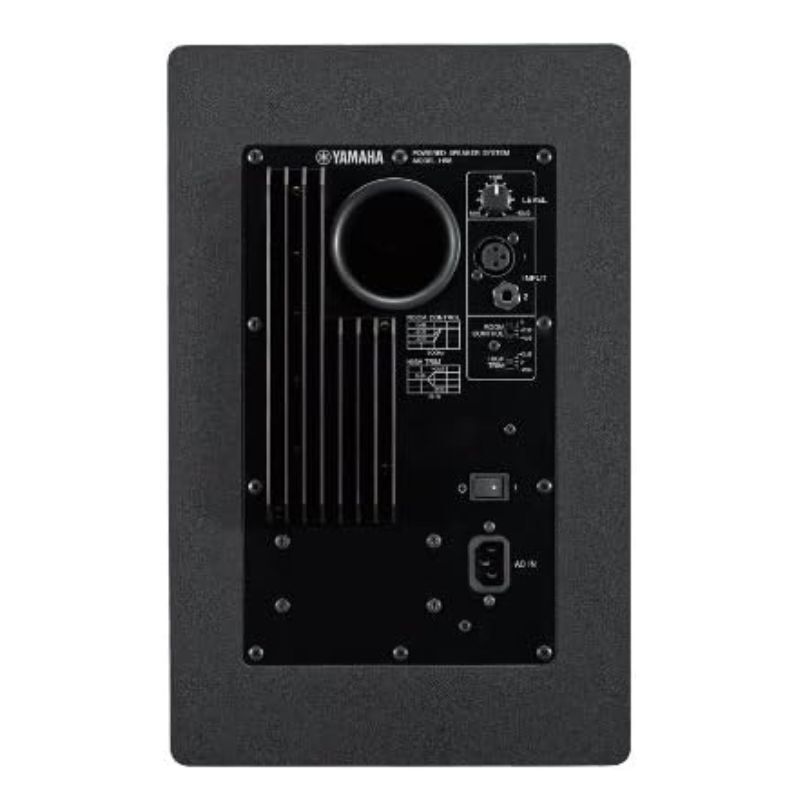
- Room Control and High-Trim Response Controls: These rear-panel switches allow you to tailor the monitor’s response to your specific room acoustics:
- ROOM CONTROL: A three-way switch (0, -2 dB, -4 dB below 500 Hz) helps compensate for the exaggerated low-end that often occurs when speakers are placed close to walls or in corners.
- HIGH TRIM: A three-way switch (+/- 2 dB at HF) provides flexible control over the high-frequency response, allowing you to fine-tune the treble to your preference or room.
- Versatile Inputs: The HS8 offers professional input options:
- Balanced XLR input: For connecting to professional audio interfaces, mixers, or other balanced sources.
- 1/4″ TRS Balanced/Unbalanced input: This versatile jack accepts both balanced (TRS) and unbalanced (TS) signals.
- Frequency Response: Boasts an impressive frequency response from 38 Hz to 30 kHz (-10dB), or more accurately 47Hz – 24kHz (-3dB) providing excellent detail across the entire audio spectrum, including deep bass.
- Iconic Aesthetic: The black cabinet with the distinctive white woofer cone has become a recognizable symbol of studio accuracy worldwide.
Who is the Yamaha HS8 for?
- Professional and Home Studio Mix Engineers: Its flat and honest sound makes it ideal for critical listening, ensuring mixes translate well to various playback systems.
- Music Producers: For crafting tracks with confidence, knowing they are hearing an uncolored representation of their audio.
- Mastering Engineers: While often used as secondary reference monitors in mastering, their accuracy is valued.
- Audio Post-Production Professionals: For precise sound editing and mixing in film, TV, and gaming.
- Anyone who values accuracy: If you want to hear your music exactly as it is, without flattering enhancements, the HS8 is a top choice.
Considerations:
- “Uncolored” Sound: While a strength for mixing, some find the HS series’ flat response less “fun” for casual listening compared to monitors with a more hyped frequency response (like some KRK models). They are designed to reveal flaws, not mask them.
- Rear-Ported Design: Although Yamaha has implemented noise reduction technology, the rear-firing port means that placement too close to a wall can still lead to some bass buildup. It’s generally recommended to give them some space from the wall for optimal low-end performance.
- Room Treatment is Important: While the room control features help, an 8-inch monitor in a small, untreated room can still cause significant acoustic issues. Proper room treatment (bass traps, absorption panels) will unlock the full potential of these monitors.
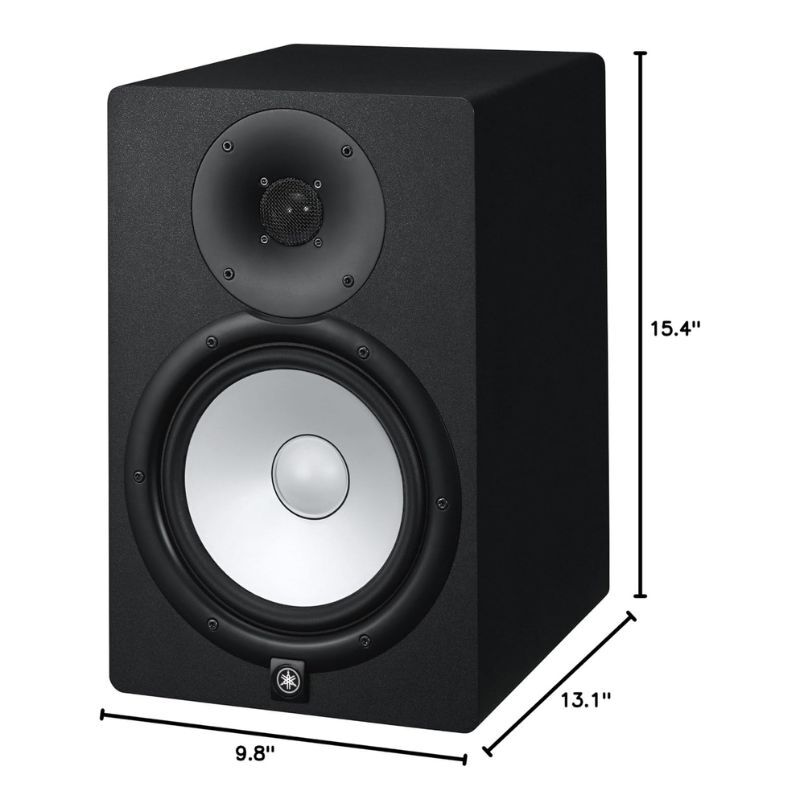
- Size and Weight: As 8-inch monitors, they are relatively large and heavy (around 10.2 kg / 22.5 lbs per monitor), requiring sturdy stands or ample desk space.
Based on 0 reviews
Be the first to review “Yamaha HS8 Powered Studio Monitor”
You must be logged in to post a review.
Related products
- Studio Monitors
Behringer Studio 50USB Powered Studio Monitors
Key Features
- Ultra-linear 2-way digital monitor speakers ideally suited for studios and multimedia workstations
- True bi-amping mode with 4 amplifiers for ultimate sound resolution
- 150 Watt of digital power amplification
- Ultra-high resolution 1″ silk dome tweeter for ultimate sound reproduction
- Long-throw 5″ woofers with deformation-resistant Kevlar cone for ultimate bass response
- Ultimate dispersion characteristics and extremely large “sweet spot” owing to advanced waveguide technolog
SKU: n/a - Studio Monitors
M-Audio BX4 Active Studio Monitors (Pair)
Overview & Key Specs
-
Drivers: 4.5″ Kevlar woofer and 1″ silk-dome tweeter with a computer-optimized waveguide for accurate stereo imaging
-
Frequency Response: Approximately 69 Hz–22 kHz
-
Power: Total peak power of 120 W (2 × 25 W RMS per speaker)
-
EQ Controls: Rear-panel High‑EQ and Low‑EQ switches let you fine-tune sound to suit your room or positioning
SKU: n/a -
- Studio Monitors
Yamaha HS4 Powered Studio Monitors Pair
The Yamaha HS4 is a compact studio monitor designed for professional audio applications, offering accurate and detailed sound reproduction. It is part of the HS Series from Yamaha, known for delivering clear, natural sound with an emphasis on reliability and versatility.
SKU: n/a


There are no reviews yet.